


In most business functions, a single hiring decision that turns out poorly is a contained problem – one role underperforms, and the rest of the business continues largely unaffected. Manufacturing production lines do not work this way.
Because roles along a production line are directly interconnected, a single hiring decision – good or bad – can ripple through the entire line’s output, quality, and safety in ways that are considerably larger than the individual role itself might suggest.
This guide looks at exactly why this happens, and what it means for how manufacturing businesses should approach hiring for production-line roles specifically.
Why Production Lines Are Uniquely Sensitive to a Single Hire
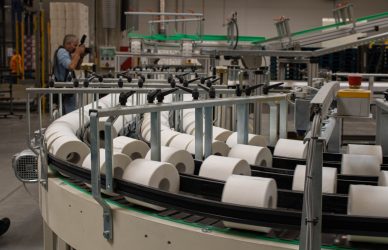
Unlike many business functions where individual roles operate largely independently, production lines are built around sequential, interdependent tasks – each role’s output becomes the next role’s input, and a slowdown, error, or gap at any single point directly affects everything downstream.
This interdependence means the quality of a single hiring decision does not simply affect that one position’s output – it affects the collective output of every role connected to it along the line.
The Domino Effect: How One Role Affects Every Role After It
Consider how this interdependence actually plays out in practice. A worker who processes materials more slowly than the line’s designed pace creates a growing backlog for every subsequent station, regardless of how efficiently those later stations perform individually.
A worker who makes quality errors at an early stage passes defects downstream, where they may not be caught until considerably more time and material have been invested in a product that ultimately cannot be used. A worker who is frequently absent or unreliable creates unpredictable gaps that ripple through the entire line’s scheduling and output planning.
In each case, the actual cost is not contained to the specific role – it multiplies across every connected position and every unit of output affected by the resulting slowdown, error, or gap.
A Realistic Scenario: One Weak Link in the Chain
Consider a production line with ten sequential roles, each designed to process a certain volume per hour. If nine of these roles perform exactly as expected, but the tenth – due to inexperience, unreliability, or simple mismatch with the role’s actual demands – processes at only seventy percent of the expected pace, the entire line’s output is constrained to that same seventy percent, regardless of how well the other nine roles perform.
This is a genuinely counterintuitive result for people unfamiliar with how interdependent systems work – excellent performance in ninety percent of the line does not compensate for a genuine weak link in the remaining ten percent, when the roles are sequentially dependent on each other.
The mathematics of interconnected systems mean a single underperforming hire can constrain the entire line’s output far more significantly than that single role’s proportional share might suggest.
The Flip Side: How One Strong Hire Lifts the Whole Line
This same dynamic works powerfully in the opposite direction. A single strong, reliable, well-matched hire in a previously weak position can lift the effective output of an entire production line, since removing a bottleneck allows every other role’s existing capacity to actually be realised, rather than being constrained by the slowest point in the sequence.
This means the value of getting a single hiring decision right, specifically for a production-line role, is considerably higher than the value of an equivalent hiring decision in a less interdependent business function – the same quality of hire produces a disproportionately larger effect on overall output when that role sits within a tightly sequential system.
Why This Sensitivity Is Often Invisible Until It’s Too Late
Many manufacturing businesses do not fully recognise this dynamic until a specific hiring decision has already gone wrong and the resulting bottleneck has become visible in overall output data.
Because the effect of a single weak hire is distributed across the entire line’s performance, rather than isolated to a single, easily identifiable metric, it can take longer to diagnose than the underlying cause might suggest – management may spend considerable time investigating broader process or equipment issues before recognising that the actual constraint traces back to a single role.
Recognising this dynamic in advance, before a specific hiring decision goes wrong, allows businesses to weight the importance of production-line hiring decisions appropriately, rather than discovering their outsized impact only in hindsight.
What This Means for How You Approach Hiring for Production Roles
Given this sensitivity, hiring decisions for production-line roles deserve a level of care and evaluation that matches their actual, outsized impact on overall output – not necessarily more time than other hiring decisions, but genuinely focused attention on the specific factors that predict success in a tightly sequential, interdependent role.
This means evaluating candidates specifically for reliability and consistency, since even strong technical skill is undermined by unpredictable attendance or inconsistent pace within an interdependent system.
It means providing genuinely thorough training and onboarding for production-line roles specifically, since a new hire still building competence in this kind of role creates a temporary bottleneck that affects the entire line during their ramp-up period.
And it means monitoring production-line hires’ actual performance closely during their early tenure, since problems here compound and become visible in overall output data more quickly than in less interdependent roles.
Building Redundancy Without Losing the Benefit of Specialization
One practical response to this sensitivity is building deliberate redundancy into a production line – cross-training workers on adjacent roles, so a single hiring gap or performance issue does not constrain the entire line indefinitely while a replacement is found and trained.
This needs to be balanced against the genuine efficiency benefits of specialisation, but even modest cross-training investment can meaningfully reduce a production line’s vulnerability to any single hiring decision going wrong.
How Euro Job Services Helps You Make the Right Hiring Decision Every Time
Given how significantly a single hiring decision can affect an entire production line, the quality of candidate matching for these specific roles deserves genuine priority, not just speed of placement. Our broader guide on why manufacturing success depends on workforce planning explores this connection in more depth, and our recruitment process is built specifically to support this kind of careful, reliability-focused matching for production and industrial roles, rather than simply filling a position as quickly as possible.
Manufacturing and industrial businesses working with us consistently describe strong outcomes tied directly to this careful matching.
An operations director in logistics and warehousing in Cluj-Napoca described a clear, immediate increase in productivity after our training and adaptation programme delivered dedicated, reliable workers into their operation – exactly the kind of positive impact a well-matched hire can have across an interdependent system.
If your business is ready to make hiring decisions that genuinely strengthen your production line rather than risking a hidden bottleneck, register your company with Euro Job Services today, or get in touch with our team to discuss your specific production and staffing needs.