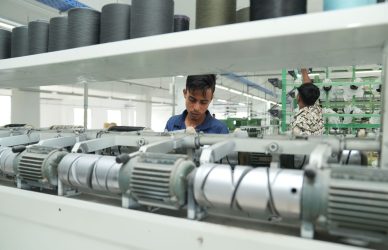



When a business plans its production capacity, it usually thinks first about machines, space, and equipment. Staffing is often treated as a secondary detail, something to sort out once the real capacity is in place. But labour is one of the hardest limits on how much a business can actually produce. A factory full of machines produces nothing without the people to run them. Understanding the link between staffing and production is essential for any business that wants to meet demand reliably and grow with confidence.
This guide explains how staffing determines production capacity, why labour is so often the binding constraint, and how to plan staffing around the output a business actually needs.
What Production Capacity Really Depends On
Production capacity is shaped by several resources together, not by equipment alone.
- Capacity depends on equipment, physical space, process design, and, crucially, the labour available to run it all.
- A business reaches its maximum output only when every one of these resources is sufficient at the same time.
- If any single resource falls short, it caps total output regardless of how strong the others are.
- Labour is one of these resources, which means staffing is a direct determinant of capacity, not a side issue.
Theoretical Capacity Versus Effective Capacity
A key distinction explains why so many businesses produce less than they think they can.
- Theoretical capacity is the maximum a business could produce if every resource were fully available.
- Effective capacity is what it can actually produce given its real constraints, including its real staffing level.
- The gap between the two is often created by staffing, when there are simply not enough people to run at full output.
- A business with excellent equipment but too few workers operates well below its theoretical capacity every single day.
Why Labour Is Often the Binding Constraint
Across industry, labour is frequently the resource that limits output most.
- Industry research shows that around one in five manufacturing plants operating below full capacity cite insufficient labour or skills as a key reason.
- Capacity constraints occur when a business hits its maximum output under existing resources, and labour is increasingly that limit.
- When people are the missing resource, adding machines or space does nothing to raise actual output.
- This makes staffing, in many businesses, the single most important lever for lifting production capacity.
The Hidden Cost of Understaffing
Understaffing does not just create pressure. It quietly drains revenue and growth.
- Research suggests around two thirds of industrial companies experience direct revenue leakage from chronic understaffing.
- Roughly one in three cite a lack of personnel as the single most critical limiting factor on their growth.
- These losses are often invisible, showing up as missed output rather than as an obvious line on a budget.
- Left unaddressed, understaffing caps a business below its potential while its equipment and overheads are paid for regardless.
How Vacancies Translate Directly Into Lost Output
Every unfilled role has a measurable effect on what a business can produce.
- An empty position on a production line or shift is not neutral, since it removes a portion of real capacity.
- When a role stays vacant, the output that role would have produced is simply lost and cannot be recovered.
- Remaining staff often cannot fully absorb the gap, so quality and pace suffer alongside quantity.
- Seen this way, a slow-to-fill vacancy is not just an HR issue but a direct and ongoing loss of production.
Capacity Utilisation and Staffing
The relationship shows clearly in how businesses measure capacity utilisation.
- Capacity utilisation is the ratio of actual production to maximum sustainable production.
- When staffing falls short, utilisation drops, because the business cannot run its resources at full output.
- A business can have high theoretical capacity yet low utilisation purely because it lacks the people to run it.
- Improving staffing is often the most direct way to raise utilisation and close the gap toward full capacity.
The Risk of Overstaffing Too
The link runs both ways, and more staff is not automatically better.
- Overstaffing adds labour cost without adding output once capacity in other resources is already reached.
- Paying for more people than the equipment, space, or demand can use erodes efficiency and margin.
- The goal is not maximum staffing, but the right staffing matched to the capacity the business actually needs.
- Understanding this balance prevents overcorrecting from understaffing into equally costly overstaffing.
Why Right-Sizing Staffing Is a Strategic Decision
Matching staffing to production capacity is a genuine strategic choice, not a routine task.
- Too few workers caps output and loses revenue, while too many adds cost without return.
- The right level depends on demand, the capacity of other resources, and the reliability of the workforce.
- Getting this balance right is what lets a business meet demand without waste, which protects both output and margin.
- Treating staffing as a strategic input to capacity, rather than an afterthought, is what separates smooth operations from constant firefighting.
Reliability Matters as Much as Numbers
Effective capacity depends not only on how many workers you have, but on how dependable they are.
- High turnover means roles sit empty during recruitment, cutting effective capacity even when headcount looks correct on paper.
- Frequent absence or unreliable attendance reduces the output a nominally full team can actually deliver.
- A stable, reliable workforce keeps effective capacity close to its theoretical maximum day after day.
- This is why retention and reliable recruitment matter to capacity just as much as raw hiring numbers do.
Numbers Alone Are Not Enough
It is worth noting briefly that having enough people does not guarantee capacity if they lack the right skills.
- A fully staffed line still falls short if the workers lack the specific skills the work requires.
- Genuine capacity comes from having both enough people and the right capabilities among them.
- Where a specific skill is scarce, filling seats with general labour does not restore full production.
- Staffing for capacity therefore means planning for the right people, not simply the right headcount.
Planning Staffing Around Production Capacity
Because staffing drives capacity, it should be planned deliberately alongside it.
- Set staffing targets against the output the business actually needs, not just against current headcount.
- Account for recruitment lead time, so roles are filled before a capacity gap opens rather than after.
- Plan for turnover and absence, so effective capacity stays close to target even as people come and go.
- Reading resources like building a workforce that can grow with your business helps align staffing plans with production goals.
Why This Matters When Scaling Production
For a growing business, the staffing constraint on capacity becomes especially sharp.
- Scaling production requires scaling the workforce in step, or the new capacity simply cannot be used.
- Businesses that invest in equipment to grow, but cannot staff it, leave that investment idle.
- Growth plans that ignore staffing lead time often stall exactly when demand is ready to be captured.
- Planning the workforce alongside the equipment is what turns a growth plan into actual increased output.
How International Recruitment Protects Production Capacity
When local labour cannot supply enough workers, international recruitment can lift the constraint.
- Where local hiring cannot fill roles fast enough, reaching a wider labour market keeps capacity from being capped.
- A structured recruitment process provides reliable access to workers, reducing the vacancies that erode output.
- Sourcing internationally turns an unsolvable local shortage into a solvable global search, protecting production capacity.
- Done through a proper partner, this keeps staffing, and therefore output, aligned with what the business needs.
How Euro Job Services Helps
Keeping staffing matched to production capacity is exactly where a recruitment partner adds value.
- We connect employers with verified international workers, helping keep roles filled and capacity protected.
- Our managed process reduces the vacancy time that quietly drains output and revenue.
- Employers can register their company to start recruiting for the roles their capacity depends on.
- You can contact our team to discuss keeping your staffing aligned with your production goals.
Frequently Asked Questions
How does staffing affect production capacity? Staffing is one of the resources that determines capacity, alongside equipment, space, and process. When staffing falls short, effective capacity drops below theoretical capacity, so the business produces less than its equipment could otherwise allow.
What is the difference between theoretical and effective capacity? Theoretical capacity is the maximum a business could produce with every resource fully available. Effective capacity is what it can actually produce given real constraints, including real staffing levels. Understaffing is a common cause of the gap between them.
Is understaffing really that costly? Yes. Industry research suggests most industrial companies lose revenue to chronic understaffing, and many cite lack of personnel as their single biggest limit on growth. The cost appears as lost output rather than an obvious budget line, which makes it easy to overlook.
Can international recruitment help with production capacity? Yes. When local labour cannot fill roles fast enough, international recruitment widens the talent pool, reduces vacancy time, and helps keep staffing, and therefore output, aligned with what the business needs.
Final Thoughts and Next Step
Staffing and production capacity are directly linked. Labour is one of the core resources that determines how much a business can produce, and it is often the binding constraint. Understaffing quietly caps output and drains revenue, while the right staffing, reliable and matched to need, keeps effective capacity close to its maximum. Planning the workforce alongside equipment and demand, and securing reliable access to workers, is what lets a business produce what it is genuinely capable of.
If you want to keep your staffing aligned with your production capacity, register your company with Euro Job Services or contact our team to get started.