


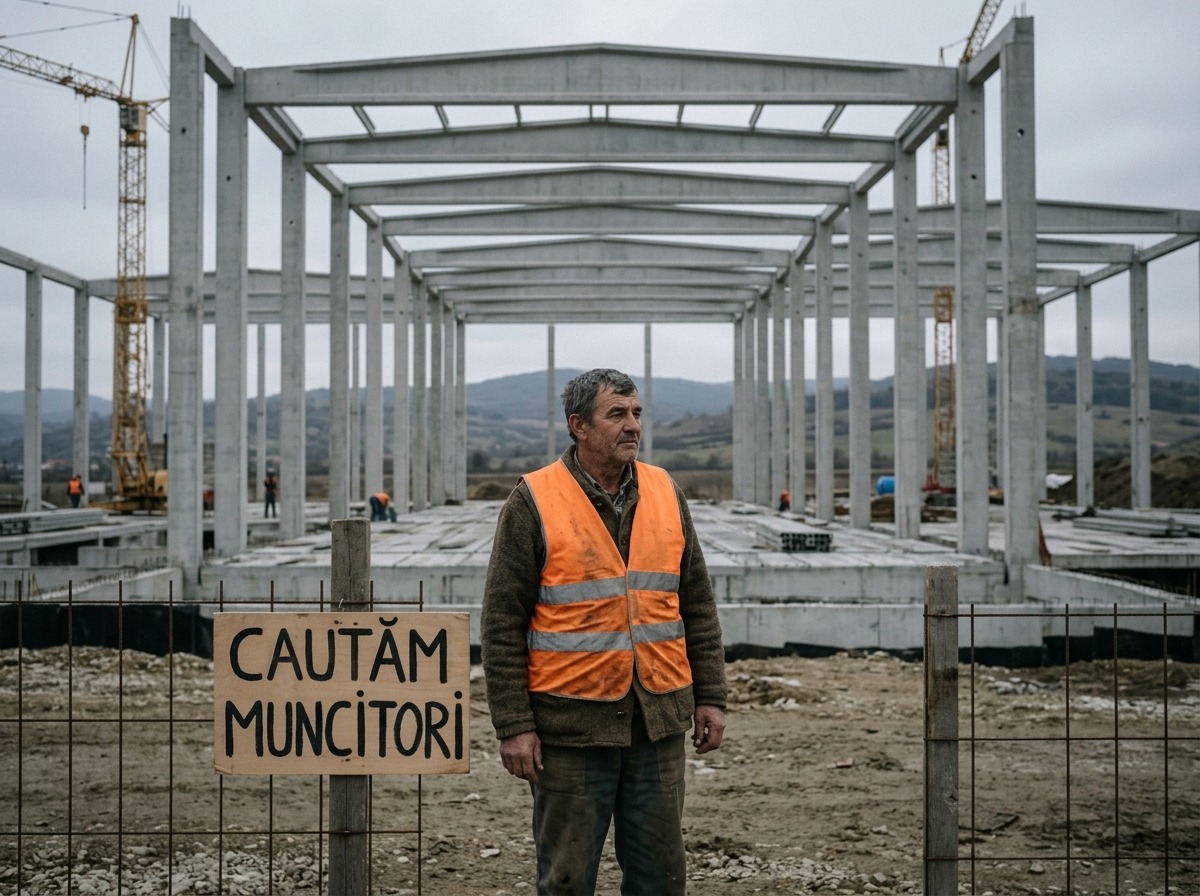
Romania’s labor shortage has moved well past the point of being a temporary, seasonal inconvenience. Across construction, hospitality, logistics, and manufacturing, businesses are facing a structural gap between the workers they need and the workers available locally – a gap that shows no sign of closing on its own.
Foreign recruitment has emerged as one of the few genuinely scalable answers to this problem, but only when businesses approach it as a long-term strategy rather than a one-off fix.
This guide looks at why short-term hiring efforts consistently fall short, and what it actually takes to build foreign recruitment into a durable, long-term solution for a Romanian business.
Understanding the Scale of Romania’s Labor Shortage
Romania’s labor gap is driven by a combination of factors: a shrinking working-age population, significant domestic emigration to Western Europe, and strong demand in specific sectors that local hiring alone simply cannot satisfy.
This is not a cyclical dip that will correct itself with the next economic upswing – it reflects deeper demographic and economic trends that are likely to persist for years.
Businesses that recognise this early, and plan accordingly, are in a considerably stronger position than those still treating each hiring cycle as an isolated emergency to be solved reactively.
Why Short-Term Fixes Aren’t Enough
Many Romanian businesses initially respond to staffing gaps with short-term measures – overtime for existing staff, temporary contractors, or a single round of foreign hires brought in to cover an immediate shortfall.
These approaches can provide temporary relief, but they rarely address the underlying problem, and they often introduce their own costs: burnout among existing staff, inconsistent quality from short-term contractors, or a one-time foreign hiring effort that is not repeated or built upon.
A genuinely long-term solution requires treating foreign recruitment as an ongoing capability within the business, not a single project undertaken once and then set aside.
Foreign Recruitment as a Sustainable, Long-Term Strategy
When approached correctly, foreign recruitment offers Romanian businesses access to a genuinely large, motivated labor pool that can be tapped into repeatedly over time, rather than a single batch of workers brought in during a crisis moment.
Businesses that build this into a repeatable, well-managed process – rather than a reactive scramble – tend to see considerably better outcomes: stronger retention, more consistent quality, and a workforce pipeline that scales with the business’s actual growth.
This shift in mindset, from emergency hiring to ongoing workforce strategy, is what separates businesses that solve their labor gap durably from those that find themselves back in the same crisis every few months.
Which Industries Benefit Most From This Approach
Not every sector experiences Romania’s labor shortage equally, and understanding where foreign recruitment has already proven most effective can help you benchmark your own strategy.
Construction, hospitality, warehousing, delivery, and manufacturing consistently show the strongest and most sustained demand for foreign labor, reflecting where domestic hiring has struggled most persistently.
We cover this landscape in more depth in Main Industries Employing Asian Workers in Romania, which gives a clearer sense of where this strategy is already delivering results at scale.
Building a Repeatable Recruitment Pipeline, Not a One-Time Hire
The core difference between a short-term fix and a genuine long-term solution is repeatability. A business that recruits foreign workers once, without building any lasting process or relationship with a recruitment partner, ends up starting from scratch every time a new gap emerges.
A business that builds an ongoing pipeline – clear role specifications, an established recruitment partner, a repeatable onboarding process – can fill new gaps considerably faster and more reliably each time they arise.
This is worth planning for deliberately from your very first recruitment effort, even if your immediate need feels like a one-time situation. Treating it as the first cycle of an ongoing capability, rather than an isolated project, pays off significantly as your business continues to grow.
Choosing the Right Recruitment Model for Long-Term Success
Deciding how to structure your recruitment – building internal capacity versus relying on a specialised agency – has a much bigger impact on long-term outcomes than it does on any single hiring round.
Internal recruitment can work well for large businesses with the resources to build genuine in-house expertise in cross-border hiring, visa processes, and candidate vetting. For most businesses, however, a specialised recruitment partner offers a faster, more reliable path to sustained results, since the infrastructure and relationships are already in place.
We explore this decision in detail in Internal Recruitment vs. Recruitment Agency: Which Is the Right Choice for Your Business?, which is worth reviewing carefully before committing to either path long-term.
Getting the Legal Foundation Right From the Start
Long-term recruitment strategies collapse quickly if the legal foundation is not solid from the beginning.
Visa and work permit compliance issues discovered years into a recruitment relationship are far more disruptive and costly than the same issues caught early, before a pattern of non-compliant hiring has already been established.
Understanding exactly what separates a visa from a work permit, and what each actually authorizes, is essential groundwork here. Visas vs. Work Permits: What Are the Differences? lays out this distinction clearly, and getting it right from your very first hire sets the tone for a compliant, sustainable recruitment programme going forward.
Investing in Integration for Long-Term Retention
A long-term recruitment strategy is only as strong as its retention rate. Businesses that invest properly in onboarding and cultural integration see dramatically better long-term outcomes than those that treat a worker’s arrival as the end of the process rather than the beginning of a new phase.
The specific challenges involved – language, workplace culture, daily life adjustment – are addressed in Challenges of Integrating Foreign Workers in Romania, and businesses serious about a long-term strategy should treat this material as a core part of their planning, not an optional afterthought.
Vetting Partners for a Long-Term Relationship, Not Just a Quick Fix
If your long-term strategy involves working with a recruitment agency, the vetting process deserves particular care, since this relationship will ideally span years and multiple hiring cycles, not a single transaction.
A partner that performs adequately for one urgent hire may not have the systems or capacity to support a genuine long-term pipeline.
10 Questions to Ask Before Partnering with a Recruitment Agency offers a practical framework for this evaluation, and it is worth revisiting periodically even after you have chosen a partner, to confirm the relationship continues to serve your business as your needs evolve.
What Long-Term Success Actually Looks Like
Businesses that get this right over several years typically describe a few consistent outcomes: predictable access to labor when new roles open up, strong retention among foreign hires compared to their initial local hiring struggles, and a recruitment process that has become routine rather than a source of ongoing stress.
The labor crisis does not disappear, but it stops being an emergency the business has to solve from scratch every time it resurfaces.
This is the real measure of a long-term solution – not a single successful hiring round, but a durable capability that continues delivering results as the business, and Romania’s labor market, continue to evolve.
Getting Started
Building this kind of long-term recruitment capability starts with a single, well-structured first step. You can register your company with Euro Job Services to begin building a genuine pipeline rather than a one-off hire, and our recruitment process page outlines exactly how we support businesses at every stage of this journey.
Our pricing and job packages are structured to support both immediate hiring needs and ongoing, long-term partnerships.
If you are ready to move beyond reactive hiring and build a genuinely sustainable solution to your staffing challenges, get in touch with our team – we are here to help you plan for the long term, not just your next open position.


[…] post on long-term solutions to Romania’s labor crisis through foreign recruitment looks at this shortage in more depth, and our practical guide on how to recruit foreign workers for […]
[…] recent article on long-term solutions to Romania’s labor crisis through foreign recruitment covers how employers across multiple sectors are adapting their hiring strategy in response to […]
[…] article on long-term solutions to Romania’s labor crisis through foreign recruitment covers how workforce shortages currently constrain operations across the […]